
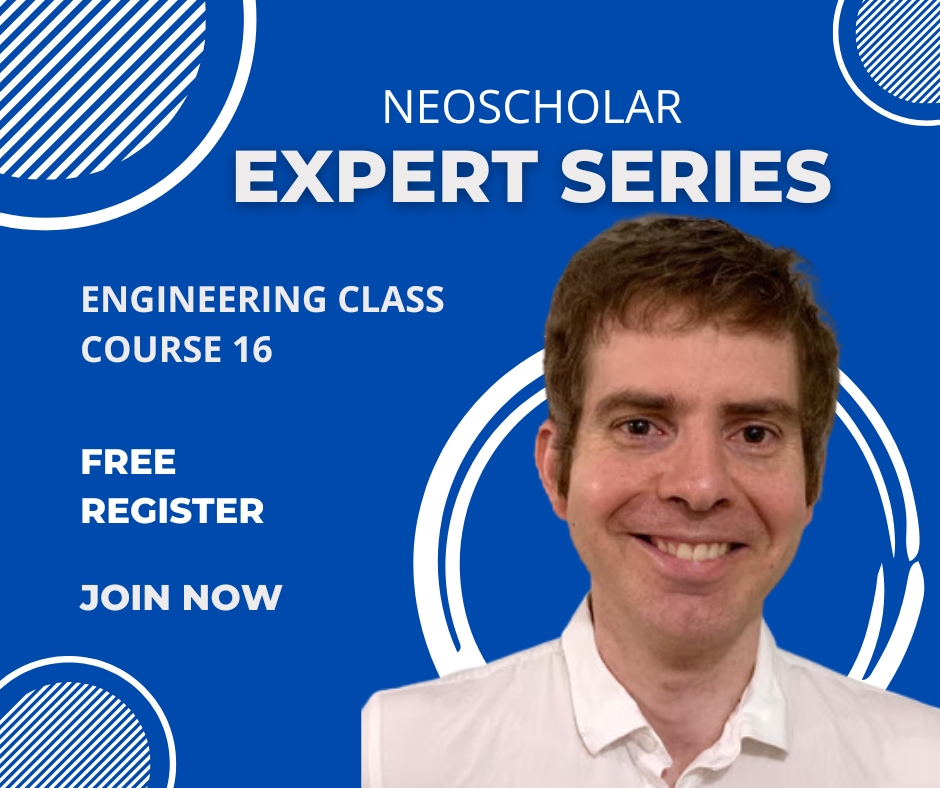
Course 16: Artificial Intelligence: Big Data Algorithm Model and Application
I. Course Description
Algorithm refers to the accurate and complete description of the solution, which is a series of clear instructions to solve the problem. Algorithm represents the strategic mechanism to solve the problem with a systematic method. Technically speaking, the algorithm is a kind of intermediary, through the algorithm model, the information with the user, the essence is to solve the problem of accurate matching between information and users. Whether it is the traditional machine learning algorithm or the deep learning algorithm emerging in recent years, through the mining of users personal attributes and data recording of users personal interests and needs in the process of network application use, this is the precise mission of the algorithm. Algorithms and big data depend on each other, and algorithms can gain information and insight from big data, while big data needs algorithms to effectively process, analyze and apply them. This interrelationship has broad implications in areas such as technology, business and society.
This course will introduce some classical algorithm design and analysis. We will introduce algorithmic techniques, such as dynamic programming, hashing, and data structure, divide-and-conquer algorithms, network streaming, and linear programming. We will also cover a wide range of analytical tools, such as recurrences, probabilistic analysis, amortized analysis, and potential functions. In addition to learning algorithms, we also involve some studies of complexity theory, —— dual algorithm design (lower bound method display and optimal algorithm in these models). Finally, we discuss the application of the new models under modern large datasets, such as online algorithms, machine learning, and data streaming.
II. Professor Introduction
 David Woodruff – Tenured professor at Carnegie Mellon University
Professor David Woodruff is the founder and chairman of the UCB Simons Institute Data Science Program. The Professor received the Simmons Researcher Award for 2020; PODS 2020 and the 2010, STOC 2013 Best Academic Research Paper Award. As a result, CMU University is trusted and served as the doctoral admissions president of Carnegie Mellon University in 2021.
III. Syllabus
- Introduction to the algorithm design
- Foundation of machine learning
- supervised learning
- Unsupervised learning
- Introduction to the algorithm optimization
- Linear programming and its variants
- Convolutional neural network and recurrent neural network
- Generate adversarial networks and transformers
- Classical methods in visual tasks
- Machine learning and computer vision